
“Wheel of Fortune”, Sally Ride, heavy metal suicide
Foreign debts, homeless vets, AIDS, crack, Bernie Goetz
Hypodermics on the shore, China’s under martial law
Rock and roller, cola wars, I can’t take it anymore
Billy Joel had had it with, well, everything geopolitical when he belted these lyrics to his latest number one hit in 1989. We Didn’t Start the Fire reached number one on the Billboard Hot 100 chart for two consecutive weeks, teaching listeners:
It was always burning since the world’s been turning.
And while Fall Out Boy gave us a worthy sequel “cover” of Joel’s hit in 2023 (encompassing Harry Potter to Brexit), the headlines have already lapped them. We are in 2026 now, and the fire is burning hotter than ever.
The “Piano Man” himself couldn’t predict the chaos of 2026. But if Billy were still banging on the keys today, the new verse might go something like this:
Venezuela, Davos snow, Iran missiles here we go
Greenland borders, tariff fights, Powell keeping money tight
Credit caps, banking scare, AI bubbles everywhere
Fed is stalling, tensions high, watch the VIX begin to fly!
Joel’s point was that the madness never stops. From Cold War to Trade War. Foreign debts to… even bigger foreign debts.
Most vanilla investors back away from the flame. They panic when the headlines get too hot. They freeze when the Fed fights with the justice department. They melt (sell) when the President threatens tariffs on Europe.
The glaring problem with this knee-jerk approach is that the fire never stops burning. These “first level” investors sell low—when headlines are scariest!
We contrarians take a different approach. We know that the “fire”—market volatility—is actually an asset class. We can tap the madness to create an income stream for ourselves. Here’s how.
When the world gets crazy, fear spikes. When fear spikes, so do option premiums. Which is when we swing into actions and sell options for their sweet premium income.
Sure, we can do this by selling (“writing”) covered call options on individual stocks and ETFs. But that can turn into a fulltime job, and our goal is to retire! So, we prefer the “Easy” button which means we buy covered call funds for yields up to 12.1%. Paid monthly to boot!
Let’s talk about two of my favorite monthly-paying covered call funds today.
First up, we have an assist from a silent partner in Washington working on our side. The administration wants lower long-term yields to boost the economy and unlock the housing market.
One year in, they have been successful. Treasury Secretary Scott Bessent continues to limit the issuance of long bonds, which boosts their price (and keeps yields low). Bessent has unlimited tools at his disposal to keep a lid on yields.
Don’t fight the Treasury!
Bond yields jump every time there is a new headline about Greenland or European tariffs. We’ll gladly fade the hysteria. Our “tariff hedge” is the iShares 20+ Year Treasury Bond BuyWrite Strategy ETF (TLTW).
TLTW holds long bonds and sells options against them for additional income. It turns geopolitical headlines into a 9.9% dividend stream, paid monthly.
Bond Yields Plus Covered Call Income
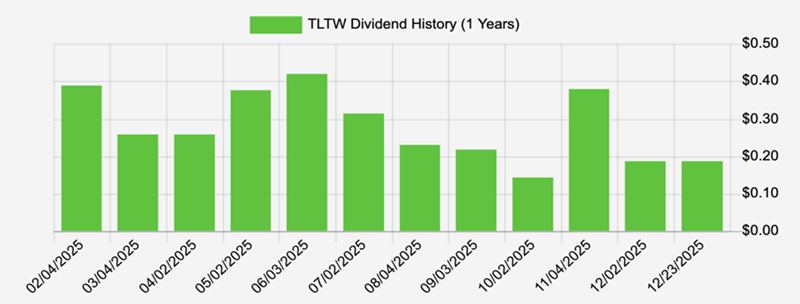
Think of this as selling “panic insurance” to the herd. When traders freak out about tariffs or a government shutdown, they rush to buy options to protect their portfolios. That spikes the price of premiums. TLTW is on the other side of that trade, selling those expensive options to the nervous masses. The scarier the headlines get, the more income this strategy generates. We are effectively shorting the frenzy.
Sudden geopolitical shocks—like a government extraction in Venezuela or a tariff tweet at 3AM—cause market-wide jitters. The S&P 500 swings wildly. The weak hands get motion sickness.
We take the motion and turn it into a 12.1% income stream with the NEOS S&P 500 High Income ETF (SPYI). This fund holds a basket of S&P 500 stocks to replicate the index, but it adds a “kicker”: it sells (writes) call options on the index to generate meaningful monthly income.
The result is that terrific 12.1% yield. And unlike many other covered call funds, SPYI uses Section 1256 contracts, which means that 60% of the gains are taxed at the favorable long-term capital gains rate.
Fire Burns, Divvies Get Dished
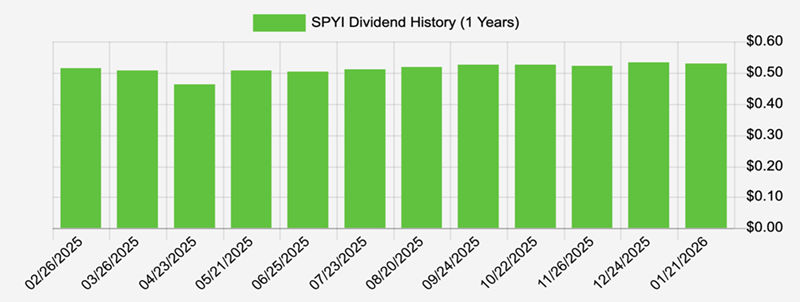
And there is another hidden structural advantage here, too. Most covered call funds cap your upside completely—if the market rips higher, you get left behind. SPYI is smarter. It often uses a “call spread” strategy rather than just simply selling calls blindly for income. This leaves a “skylight” open for the fund to capture some capital appreciation during a relief rally. You get the 12% income floor without crashing into a low ceiling.
Hey, we didn’t start the fire. But as long as it’s burning, we might as well get paid for it.
Funds like TLTW and SPYI are the key to retiring on 11% dividends that are paid monthly. And these funds are just an appetizer. My three favorite monthly dividend superstars pay up to 14.9%–click here for more info.
Recent Comments